Cross-Disciplinary Methodology
In order to explore and identify possible links between both disciplines, this research proposes a methodology grounded in a set of concepts that suggest a certain correspondence between design and geography. Thus, it becomes necessary to probe these words—the meanings they assume in each discipline—tracing their suggestive lexical connections and, through a reflective exercise, rearticulating and resignifying them so as to generate a new conception from a transdisciplinary perspective.
Crossing words
Layer – Scale – Relief – Surface – Atmosphere – Movement
Layer
The notion of a layer, understood as a fragment of a system, allows one to understand from both disciplines how parts (layers) interact to constitute a totality or systemic logic. Within this sequential interplay, each layer functions as an indispensable element for the operation of the whole.
In graphic design, the idea of layers emerges in diverse contexts: in projective exercises that require systemic interconnected thinking, or in the construction of an infographic where layers of reading are generated through specific graphic codes. Each association and interrelation functions as a stratum or layer that produces cohesion.
The reading units that follow a hierarchy also function as visual layers, implying a reading order in which various elements succeed one another, ordering the sequence of reading and suggesting a pathway for legibility and coherence.
The concept of layer is equally relevant in cartography, a visual representation that clearly links both disciplines.
A map is a graphic translation of the Earth’s geography: a three-dimensional space projected onto a two-dimensional surface. This process involves translating geographic layers into graphic layers, visual codes that enable us to fix an image of the world at scale.

The only way to interpret and read a cartography requires understanding it as a system of graphic nomenclatures, where the Earth has been dissected into minimal units to configure its representation. Reading these layers of information involves dissecting perception into its smallest units, in order to articulate the total visualization of the map. From this perspective, the notion of graphic layer as a representation of the geographic layer suggests a holistic vision: design itself may be conceived as a layer within cartography —and therefore geography— and vice versa. So both notions of layers follow each other, as if their reciprocal link thus forms a unit within a larger system. If “the holon is neither the whole nor the parts, but the integration of both realities,” the aim is to generate this integration of disciplines that appear unrelated, yet reveal themselves to be connected and converge within a single system through the notion of layer.
Geochromy Patagonia Methodology
The research route involved visits to 15 locations in southern Chile:
1. Alto Bahuales
2. Cascada de la Virgen
3. Puente de la Piedra
4. Cerro McKay
5. Puente Chacano
6. Puente Traihuanca
7. Puerto Sánchez
8. La Candonga
9. La Cantera
10. Mina Escondida
11. Terrazas de arcilla
2. Los Trasvertinos
13. El Fénix (erratic block)
14. Valle Lunar
15. Piedra Azul
The planning process considered the geographical features and accessibility of each research site, with fieldwork scheduled according to climatic conditions. The activities included:
-
Geological survey and collection of macroscopic rock samples using: geological hammer, chisel, 10x magnifying glass, scratch pencil, hydrochloric acid, plastic sample bags, notebook, GPS, and camera.
-
Application of the Munsell Color System Chart.
-
Burial and subsequent recovery of pure cellulose boards<<<.
The distribution of activities across the various sites depended on the nature of each task.
Based on the extraction of a fresh hand sample, representative of the lithological type and located in key oucrops, the sampling procedure can be summarized in the following steps:
1. Identify rock type: igneous, metamorphic, or sedimentary rock.
2. Describe texture, color, and other properties.
3. Classify the rock according to its properties.
4. Apply the Munsell Chart Code.
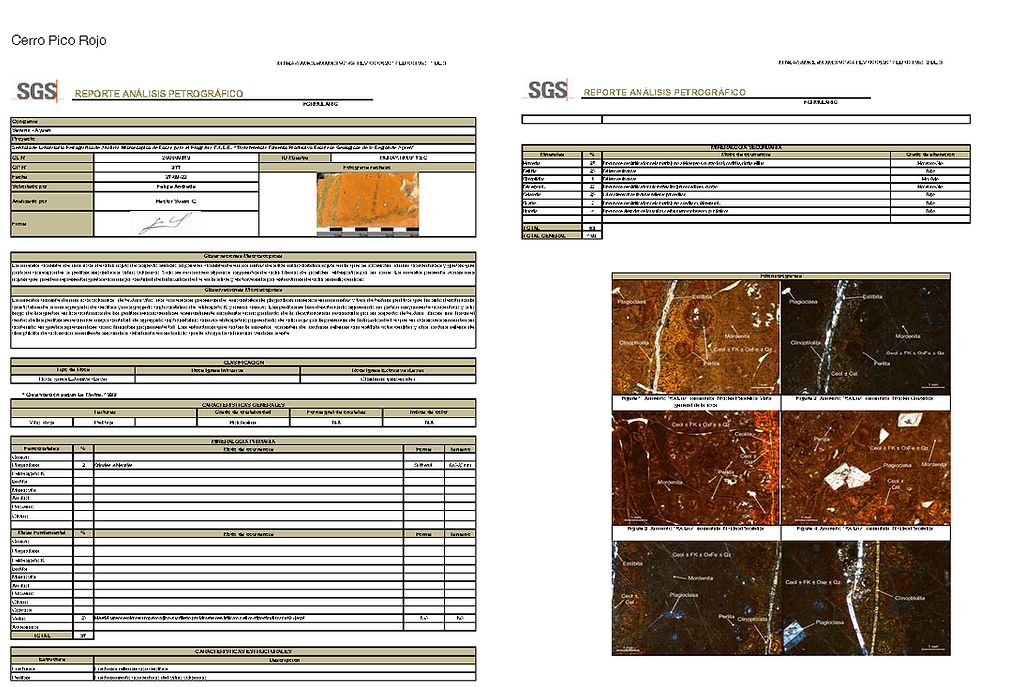
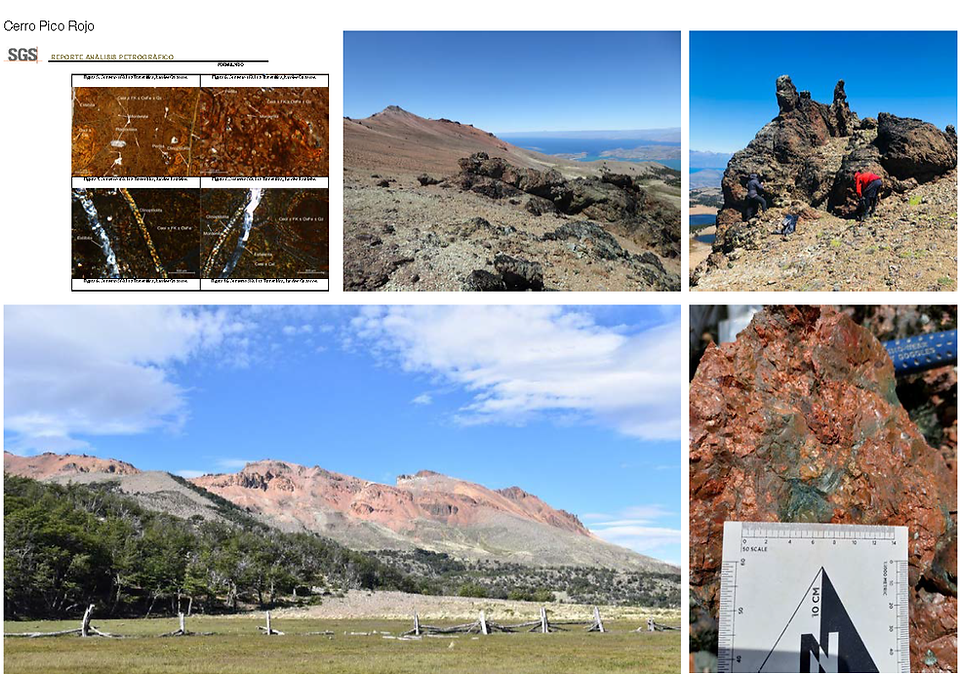
Petrographic analysis emphasizes properties such as color, luster, hardness, density, texture, porosity, and crystallinity.



Field Methodology
Introduction
Theorical Framework:
Relación entre morfogénesis y pedogénesis (geomorfología y suelos); estratigrafía; morfoscopía y análisis mineralógico; datación por antigüedad de los suelos; fases procesos pedogénicos y cronosecuencia (Mossain et al., 2005; Moody et al., 1995; Rangarajan y Sant, 2000; Tsai et al., 2007).
Descripción del ambiente (clima y vegetación).
Descripción geológica, geomorfológica y edafológica. [Estudios en la zona]
Materials and methods
Description of the study area:
The study area is located near San Pedro de Atacama, in the Antofagasta region (21º40’28’’ – 23º19’11’’ S; 69º32’48’’ – 67º50’38’’ W), including sites such as:
Cordillera de la Sal
Tatio Geysers
Machuca Church(?)
Laguna Cejar
Pukara of Quitor
Atacama Salt Flat
Valle del Arcoiris
Volcán San Pedro
1. Photointerpretation
Photointerpretation of the study area will be carried out using satellite imagery and topographic maps, in order to classify the different territorial morphologies according to geomorphological agents such as ice, water, gravity, and wind.
Geomorphological units will be defined through photogrammetry and topographic analysis using 1:50,000 scale maps and DEMs, based on their origin (morphogenesis) and the predominant geomorphological agents, including glacial cirques, moraines, rocky outcrops, alluvial fans, and debris cones.
Once the geomorphological units have been established, lithological formations (rock types) will be identified using the Geological Map of Chile at a 1:1,000,000 scale (SERNAGEOMIN, 2003), together with geological charts of the study area at scales of 1:1,250.000 or 1:100,000. Subsequently, soil orders will be defined based on the soil survey conducted by the High Andean Wetlands Information System (SITHA by its acronym in Spanish), CIREN (2016).
A preliminary analysis of the geomorphological, lithological, and pedological features of the study area will allow for the identification of key points of interest, from which specific study sites will be selected for detailed investigation.
2. Georeferencing and Cartographic Preparation
Thematic maps will be produced at a scale of 1:100.000 (to be determined), based on information obtained through photointerpretation, supplemented with available digital geological and soil databases. Since soil orders are not provided in formats suitable for processing within Geographic Information Systems (GIS), they will be incorporated through the georeferencing of digital maps available in the literature.
3. Bibliographic Review
In parallel, a compilation of geomorphological, geological, and pedological studies from the study area will be undertaken, with the aim of deepening and complementing the information gathered in the previous stages.
4. Fieldwork
Field observations of geology, geomorphology, and pedology will be conducted at each study site. This will include the identification of geomorphological markers, as well as sampling of rocks (Aguilar et al., 1986) and soils (SAG, 2019; INIA, 2019).
Rock sampling
Materials Required for rock sampling:
-
Materials
-
Geological hammer
-
10x hand lens
-
Scratch pencil
-
Sample bags
-
Camera
-
GPS
The field sampling procedure can be summarized in the following steps:
-
Extract a fresh hand sample representative of the lithology, from key outcrops. If only briquettes (ground rock) are available, they will be stored in a transparent tube.
-
Identify the rock type: igneous, metamorphic, or sedimentary.
-
Describe texture, color, and other properties.
-
Classify the rock.
The procedure for analyzing texture, color, and other properties will depend on the rock type —igneous, metamorphic, or sedimentary. The specific methodologies for each case are described below:
Igneous Rocks
Texture
Texture is defined as the set of attributes that determine the general appearance of a rock. In igneous rocks, key textural parameters include crystallinity, granularity, and crystal morphology (Best & Christiansen, 2001; Vernon, 2004; González, 2008).
Crystallinity refers to the relative abundance of crystals and glass. Accordingly, an igneous rock is termed holocrystalline when entirely composed of crystals (Fig. 1a, 1b); holohyaline, vitreous or glassy when composed exclusively of glass (Fig. 1d); and hypocrystalline when it contains variable proportions of crystals and glass.
Granularity refers to crystal size and is analyzed in three dimensions: (1) visibility to the naked eye, (2) absolute size, and (3) relative size. The first distinction separates phaneritic rocks (with clearly visible crystals, observable with the nacked eye or a hand lens) from aphanitic rocks (with crystals too small to discern even with a hand lens). This classification distinguishes plutonic from volcanic rocks.
Regarding absolute crystal size, commonly used thresholds are:(a) Coarse: >5 mm, (b) Medium: 1–5 mm, (c) Fine: 0.5–1 mm, (d) Very fine: <0.5 mm. Finally, relative crystal size compares the grain sizes of the minerals in the rock. Rocks are termed equigranular when crystals are of approximately equal size (Fig. 1a), and inequigranular when crystal sizes differ by more than one order of magnitude (1:10) (Fig. 1b, 1c).

Figure 1. Hand samples illustrating different textural parameters.
a) Holocrystalline, phaneritic, coarse-grained, equigranular granite (granular texture). b) Holocrystalline, phaneritic, medium- to fine-grained, inequigranular tonalite (porphyroid texture). c) Phenoandesite with an aphanitic groundmass and coarse-grained, phaneritic, inequigranular phenocrysts (porphyritic texture); the crystallinity of the paste cannot be determined with the naked eye. d) Aphanitic, holohyaline rhyolite (vitreous texture).
Classification of igneous rocks
For the classification of igneous rocks, the Streckeisen Diagram or QAPF diagram[1] will be used as a reference. This diagram allows the identification of rocks based on texture and the modal content of four minerals: quartz, alkali feldspar, plagioclase, and feldspathoid (Fig. 2). The diagram is applied whenever the combined percentage of quartz, plagioclase, and alkali feldspar exceeds 10% of the rock’s mineralogical composition (Fig. 3).

Classification of igneous rocks
For the classification of igneous rocks, the Streckeisen Diagram or QAPF diagram[1] will be used as a reference. This diagram allows the identification of rocks based on texture and the modal content of four minerals: quartz, alkali feldspar, plagioclase, and feldspathoid (Fig. 2). The diagram is applied whenever the combined percentage of quartz, plagioclase, and alkali feldspar exceeds 10% of the rock’s mineralogical composition (Fig. 3).
Figure 2. Streckeisen diagram. The numbers represent sectors of specific compositions, and each sector corresponds to intrusive or extrusive rocks, with the exception of sectors 9 and 10, which may correspond either to diorite or gabbro, or to andesite or basalt (Source: W. Griem, 2016, https://www.geovirtual2.cl).

Figure 3. Flow chart of the Streckeisen diagram (Source: W. Griem, 2016, https://www.geovirtual2.cl).
First, the phaneritic or aphanitic texture,described above, will determine whether the sample corresponds to a plutonic (intrusive) or volcanic (extrusive) rock. Next, the three minerals (quartz, plagioclase, and alkali feldspar) are plotted within the upper triangle of the diagram, according to their relative percentages, with the sum of these minerals normalized to 100% of the reference composition. The intersection of the projected lines will indicate the field within the triangle, and therefore the rock type (Fig. 4).
First, the phaneritic or aphanitic texture,described above, will determine whether the sample corresponds to a plutonic (intrusive) or volcanic (extrusive) rock. Next, the three minerals (quartz, plagioclase, and alkali feldspar) are plotted within the upper triangle of the diagram, according to their relative percentages, with the sum of these minerals normalized to 100% of the reference composition. The intersection of the projected lines will indicate the field within the triangle, and therefore the rock type (Fig. 4).

Figure 4. Example of a calculation within the Streckeisen triangle (Source: W. Griem, 2016, https://www.geovirtual2.cl).
The application of the Streckeisen diagram to hand sample estimation is carried out through the following procedure:
1. Estimation
-
The ratio of plagioclase vs. alkali feldspar (pink vs. white) is estimated (Fig. 5), and classified as: a) absent or low plagioclase, b) ~50/50% plagioclase, c) predominantly plagioclase or pure plagioclase.
-
The relative abundance of quartz is estimated qualitatively as: a) no quartz, b) minor quartz, c) abundant quartz.
2. Counting
-
A digital photograph of the rock sample is taken, onto which a grid of at least 12 × 12 lines is superimposed.
-
The minerals located beneath the intersections of the grid are analyzed (Fig. 6).
-
A statistical tally of intersections is made, and total percentages are calculated.

Figure 5. Example of granite and its mineralogical composition in alkali feldspar, plagioclase, and quartz (Source: W. Griem, 2016, https://www.geovirtual2.cl).

Figure 6. Grid superimposed on a digital photograph for rock sample counting (Source: W. Griem, 2016, https://www.geovirtual2.cl).
For rocks with mafic minerals, such as Fe and Mg, bearing micas, amphiboles, pyroxenes, olivine, ores, zircon, apatite, titanite, epidote, orthite, garnet, melilite, monticellite, and primary carbonates, making up more than 90% of the mineralogical composition, a different diagram will be used (Fig. 7). These rock types are known as ultrabasic rocks (e.g., dunites, which contain high proportions of olivine and no quartz; Fig. 8).
In addition, rocks can also be described according to their glass content (% by volume): a) 0–20%: glass-bearing, b) 20–50%: glass-rich, c) 50–100%: glassy. When the glass content exceeds 80%, the rocks are classified as obsidians (Pechstein in German) (Fig. 9).

.Figure 7. Diagram of ultrabasic rocks: Olivine–Pyroxene (Source: W. Griem, 2016, https://www.geovirtual2.cl).

Figure 8. Dunite sample(Source: W. Griem, 2010, https://www.geovirtual2.cl).

Figure 9. Obsidian sample (Source: www.mineralesdelmundo.com)
Metamorphic rocks
Metamorphic rocks are formed through the metamorphism of rocks (igneous, sedimentary, or pre-existing metamorphic rocks) that have been subjected to high temperatures and pressures. This process leads to changes in the mineralogy of the original rock. Some metamorphic rock types include: slates, phyllites, schists, gneisses, marbles, quartzites, hornfels, migmatites, mylonites, and amphibolites.
Field description of metamorphic rocks involves mesoscopic features observable in hand samples, such as origin, overall color, grain size and uniformity, fabric elements, structure, texture, and mineral components.
Origin - Fabric
Fabric refers to the spatial arrangement of crystals within the rock. Three main types of fabric are identified: linear, planar, and isotropic (Fig. 10).

Texture
Texture in metamorphic rocks refers to the relative size, shape, and spatial relationships of mineral grains. Broadly, textures can be classified as foliated, non-foliated, or weakly foliated.
Metamorphic rocks are further described by specific textures:
a) Granoblastic, with equidimensional crystals forming a mosaic (Fig. 12); b) Lepidoblastic, with intergrown micas uniformly oriented (Fig. 13); c) Nematoblastic, with intergrown amphiboles with uniform orientation (Fig. 14); d) Porphyroblastic, with porphyroblasts set in a matrix (Fig. 15).

Figure 12. Granoblastic texture in metamorphic rocks
Figure 10. Types of fabrics in massive structure.
Structure
Structure refers to the distribution and arrangement of crystals within the rock. The following structures may be identified: a) homogeneous or massive, b) banded, c) curved banded, d) nodular (spheroidal aggregates within a matrix), and e) brecciform (clasts embedded in a matrix) (Fig. 11).

Figure 11. Types of structure in metamorphic rocks.

Figure 13. Lepidoblastic texture in metamorphic rocks

Figure 14. Nematoblastic texture in metamorphic rocks.

Figure 15. Porphyroblastic texture in metamorphic rocks.
Clasification of Metamorphic rocks
Sedimentary Rocks:
Sedimentary rocks are broadly divided into two groups based on their origin: clastic rocks and chemical and biogenic rocks. In the first group, classification is based on grain size, texture, composition, and sedimentary structures. These properties allow inferences about depositional environment, including climate, sea-level change, and the type and energy of the transporting agent.`For chemical and biogenic rocks, classification relies on mineralogical composition and depositional environment. The methodology applied to each type is detailed below.
Clastic Sedimentary Rocks
Clastic sedimentary rocks form from the disaggregation of rocks(clasts) that are transported and deposited in low-lying areas (sedimentary basins). Compaction of these sediments under pressure, together with cementation by circulating groundwater, results in the hardening of sediments into clastic sedimentary rocks (sedimentites).
Grain Size (Granulometry)
Grain size analysis is conducted using comparative charts and a hand lens. Both the mean and maximum grain sizes are determined, according to the Udden–Wentworth scale (Table 1). Classification by grain size includes:
-
Gravel: > 2 mm
-
Sand: 2 mm – 62 microns (1 mm = 1000 microns)
-
Silt: 62 – 4 microns
-
Clay: < 4 microns
The last two categories are grouped under the term mud.
Since a rock may contain varying proportions of clasts of different grain sizes, sedimentites are classified based on the dominant grain size (Fig. 16).


Figure 16. Classification of clastic sedimentary rocks based on clast size.
Texture:
Textural description includes sorting, roundness, sphericity, and textural maturity.
Sorting refers to the variation in grain size of the rock components. This property provides clues about the transport agent and transport distance. Along with grain shape, it allows an assessment of sedimentite maturity. Sorting is determined by comparison with standard reference charts (Fig. 17)

Table 1. Clast size, name of detrital sediment, and name of sedimentary rocks.

Figure 17. Sorting chart for sedimentary rocks.
Sphericity and roundness are characteristics that can be quantified by comparison with shape charts (Fig. 18). These parameters provide insights into the textural maturity of the sediment or rock.

Figure 18. Chart for clast sphericity and roundness.
Color
Color also provides information about depositional environment conditions and diagenetic changes affecting the sediment.
To a large extent, the color of sedimentary rocks is determined by the oxidation state of iron. Ferric iron imparts reddish hues, typical of continental sediments from semi-arid environments. Ferrous iron produces greenish tones, associated with reducing environments. Organic matter or finely disseminated pyrite impart gray to black coloration; the presence of both also indicates anoxic conditions. A standardized color chart based on the Munsell color system will allow to classify the color of sediments and rocks.
Composition
Composition includes the description of mineralogy (proportion of quartz and feldspar), the presence of clastic fragments and volcanic glass (Fig. 19); the relative abundance of components (% lithic grains, crystals, or bioclasts) (Fig. 20); the presence of matrix and the proportion and type of cement. Fine-grained sedimentary rocks, such as silt and clay, as well as some of chemical origin, may be difficult to classify in the field


Figure 20. Chart of relative abundance in sedimentary rocks.
The description of each compositional property is analyzed as follows:
A. Clasts (type, %, color)
-
Quartz (%)
-
Feldespar (%)
-
Lithic Fragments (%)
B. Matrix (Type, %, color)
In addition to clasts, sedimentary rocks contain a fine-grained matrix. Rudites typically present a matrix composed of gravel- and/or mud-sized particles, whereas sandstones generally contain a mud-sized matrix. The composition of the matrix is often similar to that of the clasts it supports, since its formation is contemporaneous with the generation of the clasts. The proportion of matrix can vary considerably.
C. Cement (Type, %, color)
Cement is a material formed after the deposition of clasts and matrix, and, together with the matrix, provides cohesion to the sediment. Cement may also vary in grain size.
D. Fossils (Type, %)
Sedimentary structures
The description of sedimentary structures (e.g., ripple marks, desiccation cracks, flute casts, etc.) provides information on depositional processes and environmental conditions. Figure 21 illustrates some structures that serve as indicators of polarity.
Figure 19. Diagram for the classification of sedimentary rocks based on mineralogy (sand-sized grains or larger).

Sedimentary structure
Describing the sedimentary structure (ripples, drying cracks, flutes, etc.) will reveal the depositional processes and conditions. Figure 21 illustrates some structures indicative of polarity.
Figure 21. Sedimentary structures indicative of polarity. In all cases, strata are shown in their normal position. a) The sharp crests of ripple marks point to the top of the bed. b) The concave surface of a paleochannel points to the base. c) In some cases, cross-bedding is asymptotic toward the base of the layer. d) The pointed ends of desiccation crack fills point downward toward the base. e) Irregular dissolution surfaces occur at the top of a limestone bed. f) Fossilized footprints. g) Arrangement of shells with their concave surface oriented downward, toward the base of the bed, in current-deposited sediments.
Provenance Area and/or Depositional Environment
Clasification (rock name)
The classification of clastic sedimentary rocks is based on the properties described above. The following are some sedimentary rock types and their respective characteristics:
Rudites or conglomerates: fragments > 2 mm (gravels). If clasts are rounded, the rock is termed a pudding stone; if angular, a breccia. Composition determines whether the rudite is calcareous, granitic, quartzitic, etc.
Sandstones: fragments 2 – 0.0625 mm (sands), with < 15% matrix. If dominated by quartz grains, they are classified as quartzites; if feldspar-rich, arkoses; if calcareous, calcarenites.
Mudrocks: grains < 62 microns (mud), with a proportion > 75%. Claystones contain grains < 0.004 mm (4 microns), composed of clay minerals derived from the alteration of other (feldspar); siltstones contain grains 0.0625 – 0.004 mm, consisting of fine detrital material and clay minerals.
Chemical and Biogenic Sedimentary Rocks
Sedimentary rocks of chemical origin are formed by the precipitation of salts in lagoons and marine environments. In contrast, biogenic sedimentary rocks result from the activity of living organisms (e.g., skeletal remains, shells, coal).
To identify these sedimentary rocks, its composition and depositional environment will be described.
-
Composition
-
Depositional environment
-
Rock name
Color
Color is one of the most evident characteristics of a rock, yet also one of the most difficult to interpret. With the exception of gray and black, which are mainly due to the presence of organic matter, most rock colors result from iron staining.
Geomorphology
Geomorphological Markers
Soils
Soil sampling and analysis in the field aims to characterize properties such as color and texture, in order to identify the soil type (taxonomy) and investigate the processes that led to its formation (pedogenesis).
Materials
-
Shovel
-
Spatula
-
White paper
-
Sample bags
-
Drying materials
-
Distilled water
-
2 mm (100 microns) sieve
-
Munsell Soil Color Chart (Munsell, 1975).
Color
Soil color determination will be carried out using the Munsell Soil Color Charts (Munsell, 1975). Sampling will follow standard soil sampling methodologies (SAG, 2019; INIA, 2019). Samples will be stored in sealed bags (e.g., Ziploc) and preserved at ---ºC. Preparation of samples for analysis consists of disaggregating the soil and sieving it through a 2 mm mesh sieve.
Color analysis is conducted on a white background. Using the color templates of the Munsell Soil Color Charts, the sample’s hue, value (lightness), and chroma (saturation) are identified (Fig. 22). The specific values of these variables allow determination of the precise color name of the soil sample, whether in a moist or dry state.

Figure 22. Templates from the Munsell Soil Color Charts for describing soil color.
Texture
Textural or granulometric analysis refers to the quantitative determination of the proportion of each granulometric fraction that makes up the mineral solid phase of a soil sample. The granulometric analysis yields approximate percentages of the textural separates by horizon, after which the textural class is determined for each horizon and pedon, following the Soil Survey Manual (Soil Survey Division Staff, 1993). Although no laboratory granulometric analyses (or sieve column tests) will be performed, the approximate sand content of the samples will be determined using a simple method that allows identification when the soil contains: a) >85% sand, b) between 70 and 85% sand, c) <70% sand, d) between 65 and 85% sand, e) between 45 and 65% sand, f) <45% sand. For this analysis, ~500 g soil samples are required. The procedure for determining the approximate sand percentages is as follows:
1. Once the soil sample has been sieved, retaining only the fraction <2 mm, it is moistened and shaped into a ball. Based on the result, the classification is:
a). If the ball cannot be formed, the soil contains >85% sand.
b) If the ball breaks easily, the soil contains 70–85% sand.
c) If the ball does not break, the soil contains <70% sand.
2. A small roll is then formed by hand and then on paper:
a) If a roll of 3 mm thickness can be formed, the soil contains <85% sand.
b) If a roll of 1 mm thickness can be formed, the soil contains <65% sand.
c) If a roll of 3 mm thickness and 10 cm in length can be formed, and subsequently shaped into a circle without breaking, the soil contains <45% sand.
Additionally, an approximate measurement of the proportion of each textural fraction (sand, silt, and clay) will be conducted using a glass bottle or jar and 5 cm of the soil sample. The procedure is as follows (Fig. 23):
1. Place 5 cm of soil in the bottle and fill with water.
2. Shake the mixture and let it settle for 1 hour. After this time, the water will become clear and the particles have settled.
3. Coarse particles (sand) will settle at the bottom, silt in the middle, and clay at the top.
4. Estimate the proportion of each textural fraction.

Figure 23. Bottle test for determining the proportion of sand, silt, and clay in a soil sample.
Source: http://www.fao.org/tempref/FI/CDrom/FAO_Training/FAO_Training/General/x6706s/x6706s06.htm (FAO Training Manual)
Once the percentages of each textural fraction are determined, classification is made using the USDA textural triangle (Fig. 24).

Figura 24. Triángulo de textura USDA