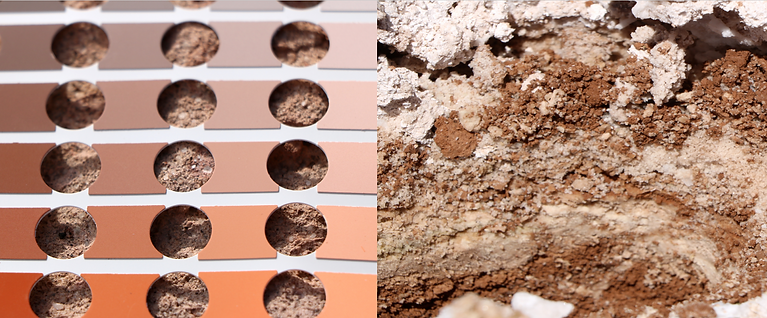
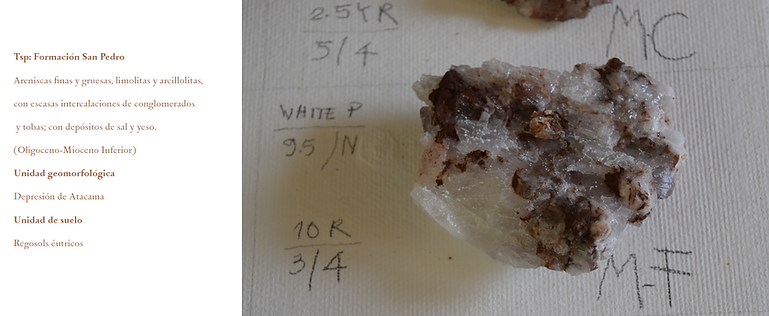
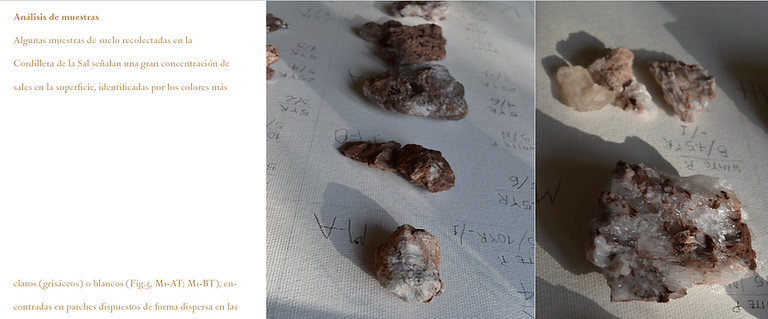
This research established a convergence between two distinct disciplines —physical geography on one hand and design on the other— seeking to determine their coordinates through a multiple correlation of factors that identified a binding point in the perceptual study of color, using the Munsell Color Notation System as its analytical methodology. At the same time, the aim of this study was to propose a perceptual approach to the territory. To achieve this, certain definitions of landscape were analyzed, reformulating their conceptualization from a new paradigm of perceptual bias or environmental fragmentation.
Within the context of confinement brought about by the Covid-19 pandemic, which unfolded simultaneously with the development of this project, the methodology had to be adapted. The initial activity, planned as a journey to northern Chile, could not be carried out on the scheduled dates.
As a result of this methodological shift, the decision was made to “invert” the research process, which in turn made it possible to uncover diverse connecting points, materialized into a series of concepts that were proposed and addressed on a weekly basis.
Thus, the journey is conceived not merely as physical displacement, but as a process that, in this case, became feasible through a virtual framework that enabled us to collect and investigate sites remotely, creating a dynamic of telematic exploration.
In this scenario, where society found itself confined within the limits of its own domestic space, where direct perception of the landscape was restricted, cut, fragmented, and temporarily suspended in its deepest essence, the urgency and contingency of reinstating the question What is landscape? became more pressing than ever.
This project, therefore, seeks to reformulate possible answers by proposing a transdisciplinary encounter that may open new pathways to recover and re-signify the fragility of Chile’s mountainous landscapes and ecosystems, which remain under constant threat of imbalance. In doing so, it contributes to cultural conservation through the valorization of our geo-heritage memory.
Object Book MNBA